Florida’s humid air, salty coastal breeze, heavy pollen, and intense sun make windows dirty fast. The right window cleaning solution removes grime without leaving streaks — and you don’t always need expensive store-bought sprays. Below is a complete, Florida-tested guide covering DIY recipes, ingredients, types, safe usage, professional pricing, and the best tools to get crystal-clear windows year-round.
What Is the Best Thing to Use to Clean Windows?
The best window cleaning solution is a mix of distilled water, white vinegar, and a few drops of dish soap, applied with a microfiber cloth and finished with a rubber squeegee. This combination cuts through Florida’s mineral residue, pollen, and salt spray without leaving streaks.
For tough buildup (hard water spots, sea-salt film), add a splash of rubbing alcohol — it evaporates quickly and prevents streaking in humid weather.
Quick recommendation:
- For everyday cleaning: Vinegar + water + dish soap
- For coastal homes: Add isopropyl alcohol for salt residue
- For deep cleaning: Commercial ammonia-based cleaner (e.g., Windex Original)
- For tinted windows: Ammonia-free formula only
How to Make Homemade Window Cleaner? (3 Proven Florida Recipes)
Homemade window cleaners are cheap, eco-friendly, and surprisingly effective. Here are three recipes that work especially well in Florida’s climate.
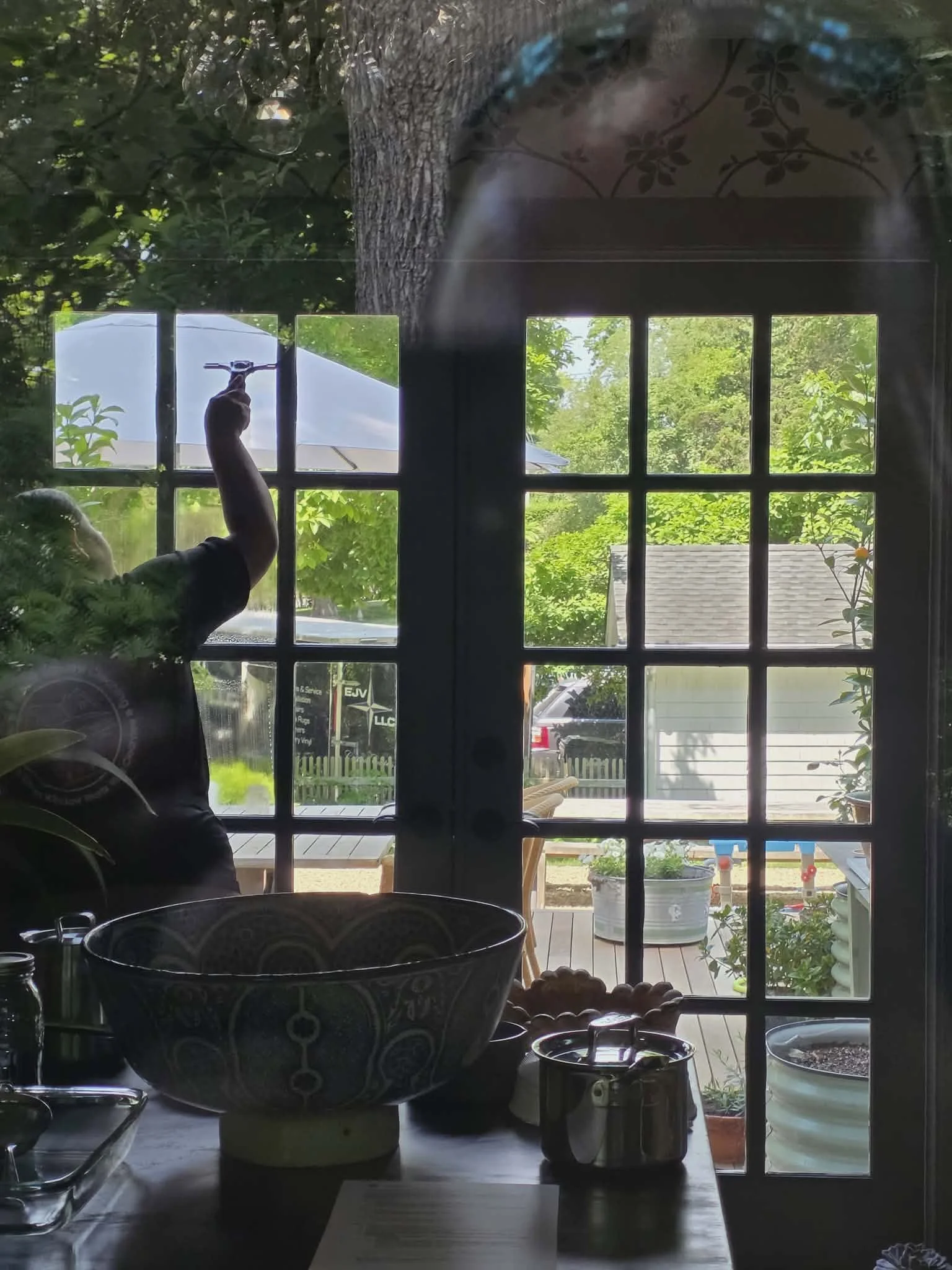
Recipe 1: Classic Vinegar Glass Cleaner (Best for Everyday Use)
- 2 cups distilled water
- ½ cup white vinegar
- ¼ cup rubbing alcohol (70%)
- 1–2 drops dish soap
Mix in a spray bottle and shake gently. The alcohol speeds drying — crucial in Florida humidity — while vinegar dissolves mineral spots from hard water.
Recipe 2: Heavy-Duty Cleaner (Best for Salt & Pollen Buildup)
- 1 cup warm distilled water
- 1 cup white vinegar
- 1 tablespoon cornstarch
- 1 teaspoon dish soap
The cornstarch sounds odd but acts as a gentle abrasive that lifts stuck-on grime without scratching glass. Shake well before each use.
Recipe 3: Streak-Free Outdoor Window Spray (Best for Sliding Glass Doors)
- 1 gallon warm water
- ¼ cup ammonia
- ¼ cup white vinegar
- 2 tablespoons dish soap
Use a bucket and squeegee for large lanai or patio doors. Never combine ammonia with bleach.
Florida tip: Always use distilled water — Florida tap water is high in calcium and magnesium, which leave white spots when it dries.
What Are the Ingredients in Window Cleaner?
Whether store-bought or homemade, most window cleaners contain a similar core set of ingredients, each with a specific job:
- Water (solvent): Carries the other ingredients and dissolves dirt.
- Isopropyl alcohol or ethanol: Evaporates quickly to prevent streaks.
- Ammonia (in many commercial brands): Cuts grease and shines glass.
- Vinegar (acetic acid): Dissolves mineral deposits and hard water stains.
- Surfactants (dish soap, detergents): Loosen oil, fingerprints, and pollen.
- Fragrance and dye: Cosmetic only — not required for cleaning.
- Glycol ethers (commercial cleaners): Help dissolve waxy buildup.
If you have tinted windows, low-E coatings, or solar film — common in Florida homes — avoid ammonia-based cleaners, as ammonia can degrade the film over time.

What Are the Different Types of Window Cleaners?
Choosing the right type depends on what you’re cleaning and where you live in Florida.
- Ammonia-Based Cleaners — Best for kitchen windows and greasy glass. Powerful, fast-drying, but harsh fumes. Avoid on tinted or coated windows.
- Vinegar-Based / Eco-Friendly Cleaners — Safe for kids, pets, and the environment. Great for daily use and ideal for homes with hurricane impact windows that have protective coatings.
- Foam Cleaners — Cling to vertical glass without dripping. Perfect for second-story windows and shower doors with hard water spots.
- Spray-and-Wipe Commercial Cleaners — Convenient ready-to-use bottles like Windex, Sprayway, or Method.
- Concentrates for Professionals — Sold by the gallon, diluted with water. Common for window-cleaning companies serving large Florida homes and condos.
- Specialty Coastal Cleaners — Formulated for salt removal; popular along the Gulf Coast, Miami Beach, and the Keys.
How to Use Window Cleaner? (Step-by-Step for Streak-Free Results)
Florida’s high humidity makes streaking the #1 complaint. Follow these steps for a flawless finish:
- Pick a cool, cloudy day. Direct Florida sun dries the cleaner too fast, leaving streaks. Early morning or late afternoon is best.
- Dust the frame and sill first. Loose pollen and dirt will smear if you skip this.
- Spray lightly. Two to three sprays per window pane is enough — soaking creates drips.
- Wipe in an “S” pattern with a clean microfiber cloth (not paper towels, which leave lint).
- Use a rubber squeegee for large windows. Pull top-to-bottom in overlapping strokes, wiping the blade between passes.
- Dry the edges with a separate dry microfiber cloth.
- Buff lightly to remove any remaining haze.
For exterior windows, rinse with a hose first to remove pollen, lovebugs, and salt spray before spraying cleaner.
What Are the Safety Precautions for Using Window Cleaner?
Window cleaners may look harmless, but several can cause real harm if misused.
- Never mix ammonia and bleach — it creates toxic chloramine gas.
- Ventilate the room. Open doors or run fans when using commercial cleaners indoors.
- Wear gloves if you have sensitive skin, especially with ammonia or concentrated formulas.
- Protect your eyes when cleaning overhead windows; drips can cause irritation.
- Keep out of reach of children and pets — blue-colored sprays look like sports drinks.
- Avoid using on hot glass. Sun-baked windows in Florida summers can crack from cold cleaner shock.
- Use a stable ladder for second-story windows, and never stretch sideways. Falls are the #1 home window-cleaning injury.
- Label DIY bottles clearly so no one mistakes them for drinking water.
If a cleaner is swallowed, call Poison Control at 1-800-222-1222 immediately.

What Is the Average Price to Have Your Windows Cleaned in Florida?
Professional window cleaning prices in Florida depend mostly on home size, window type, and location. Instead of confusing per-window estimates, most reputable Florida cleaners now price by home square footage. Based on current 2025–2026 market rates:
- Mobile homes: Starting at $350
- Small homes (under 1,200 sq ft): $450 – $1,000
- Standard homes (1,200 – 1,600 sq ft): Starting at $700 (interior + exterior)
- Larger homes (1,800+ sq ft): Starting at $1,000
- Oversized & luxury homes (large windows, skylights, multi-story foyers): $1,799 and up — final price quoted after on-site inspection
- Per-window pricing (small windows only): $15 – $18
For comparison, the same 1,200–1,600 sq ft home in New York starts at around $899, so Florida homeowners generally pay slightly less for similar service.
Florida note: Coastal cities like Miami, Naples, Sarasota, and the Keys trend toward the higher end due to salt buildup and harder-to-clean conditions. Inland cities like Orlando, Ocala, and Gainesville often fall at the lower end of these ranges.
Final Florida Window-Cleaning Tips
- Clean exterior windows every 3 months — salt, pollen, and afternoon storms build up fast.
- Use rainwater or distilled water for the final rinse to avoid spots.
- After a hurricane or tropical storm, rinse windows immediately to prevent salt etching.
- Microfiber cloths beat newspaper and paper towels every time.
- For very tall windows, invest in a water-fed pole system or hire a pro — your safety is worth more than the savings.

With the right window cleaning solution, the right technique, and a little Florida know-how, your windows can stay crystal-clear year-round — bringing in more natural light, better views, and even improving your home’s curb appeal.